UI/UX
UI Implementation Mistakes That Hurt Landing Page Results
Getting a landing page to match the design file is not the same as getting it to convert. The gap usually lives in small implementation decisions — spacing, mobile hierarchy, CTA context, interaction quality — that rarely show up in a visual design review but users feel immediately.
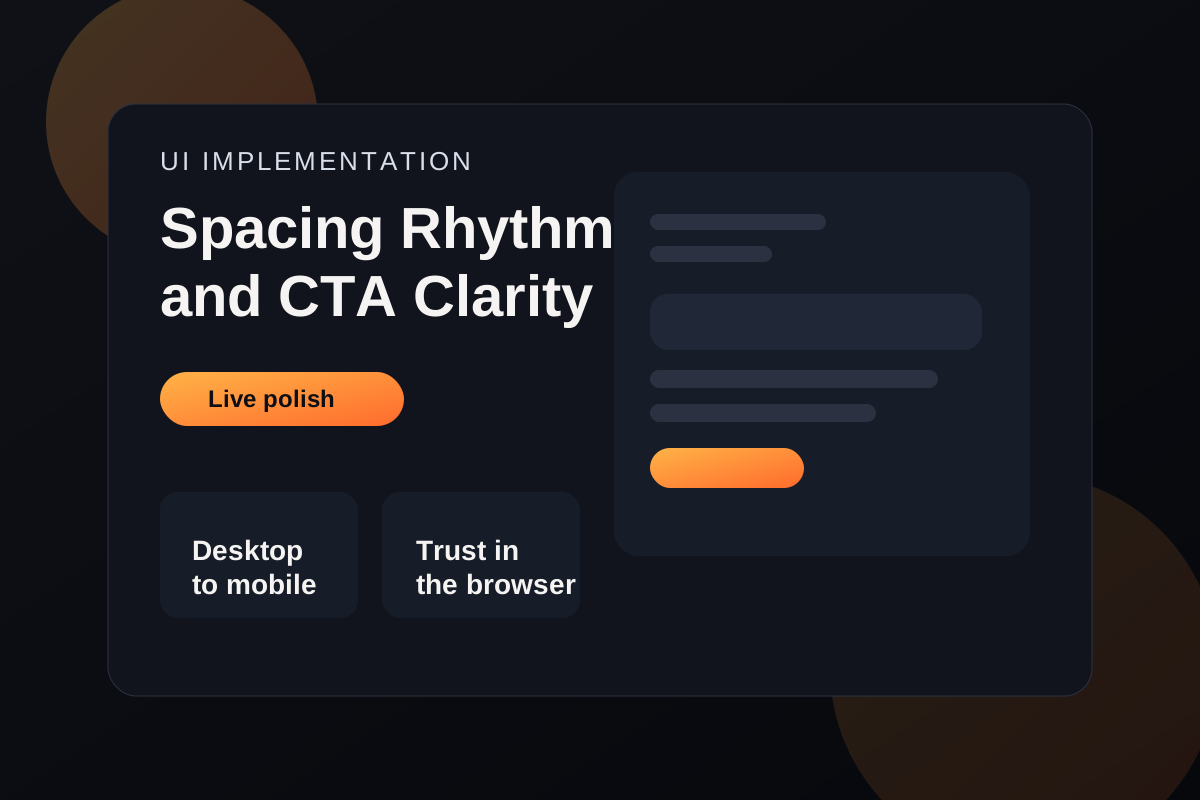
The short version
Key takeaways
- Small implementation inconsistencies can weaken the whole page.
- Mobile hierarchy matters as much as desktop polish.
- Buttons convert through context, not color alone.
- Frontend polish signals business reliability.
A page can look visually close to the design and still underperform because the live implementation misses the moments where trust and clarity are built. Conversion often drops because of frontend details that seem small in review but feel costly once the page is live.
Inconsistent spacing breaks reading rhythm
When spacing feels uneven, sections become harder to scan and value propositions feel less confident. Good implementation preserves the visual rhythm that helps someone move through the page without friction.
Weak mobile hierarchy hides the real offer
A landing page that works on desktop can still bury the offer on mobile through oversized blocks, poor order, or CTA friction. That is often where conversions are quietly lost.
CTA quality depends on surrounding context
A button does not convert because it is bright. It converts when the surrounding copy, spacing, trust cues, and next-step clarity make clicking feel logical and safe.
Polish matters because users read it as reliability
Sloppy alignment, awkward interactions, and unstable layout are not just visual issues. They quietly signal lower business quality and reduce confidence before a user ever fills the form.
Match the interface rhythm to the real buying journey
Good UI implementation helps someone understand what to do next without working for it. That means the strongest headings appear before proof, the proof appears before the ask, and the CTA arrives with enough context to feel credible.
Stress-test the page with final content, not placeholders
Longer headlines, real client names, actual screenshots, multi-line bullet points, and longer form labels all reveal implementation issues that placeholder content hides.
Need a second pair of eyes?
Turn the advice into an action plan for your website.
I can review the pages that matter most, identify the gaps affecting search and conversion, and help implement the fixes.
Common questions
Frequently asked questions
Yes. Trust is built visually and behaviorally. If the live page feels inconsistent or harder to use than expected, users hesitate.

Written by
Hasnain Saeed
Freelance Shopify, WordPress & Webflow Developer
Hasnain Saeed is a freelance web developer helping international clients build, improve, and maintain Shopify, WordPress, and Webflow websites with a focus on content clarity, technical quality, and dependable execution.
More about Hasnain